Your Podcast Queue Is a Lie You Keep Telling Yourself
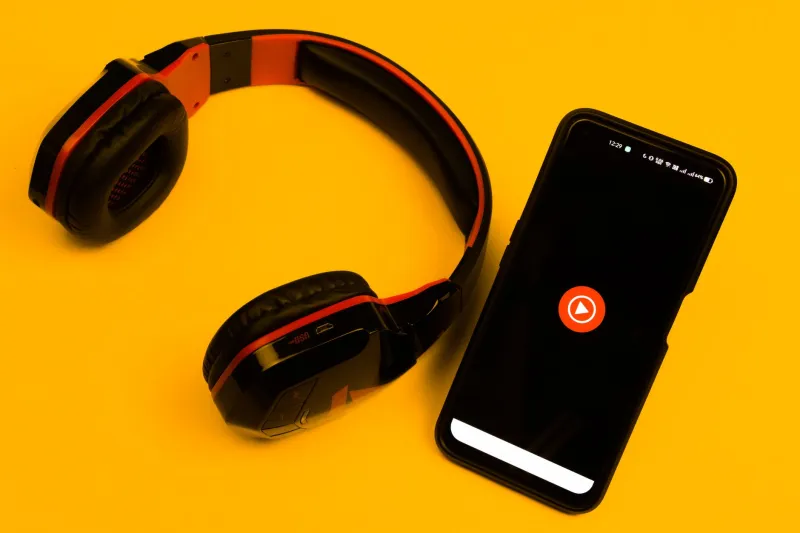
There it is. Sitting right there on your phone. Episode 47 of a true crime podcast you started in January. A three-part series on the history of jazz you downloaded during a road trip. That interview with a productivity guru someone texted you with the message "you NEED to hear this." All of them sitting in your queue like unopened mail, piling up behind each other with a patience you definitely do not have.
Welcome to the podcast backlog — one of the quietest, most universal forms of digital self-deception happening in America right now.
We're All Doing It
The numbers are kind of wild. According to various listener behavior surveys, the average podcast subscriber follows somewhere between six and ten shows actively — but has dozens more sitting in their app doing absolutely nothing. Spotify, Apple Podcasts, and Pocket Casts are full of people who hit "subscribe" with the full intention of catching up someday, and then just... don't.
This isn't laziness, exactly. It's something more specific. There's a particular kind of optimism that kicks in when you subscribe to a podcast. You're not committing to watching something. You're not blocking off two hours on a Friday night. You're just saying yes to the idea of a show — leaving the door open for a future version of yourself who has a longer commute, more dishwashing to do, or a sudden passion for 18th-century European economics.
That future self almost never shows up.
Why Audio Feels So "Saveable"
Here's the thing about podcasts that makes them uniquely easy to hoard: they don't demand your eyes. There's a psychological permission slip that comes with audio content — a sense that it can slot into the margins of your life without requiring dedicated attention. You tell yourself you'll listen while cooking, while driving, while folding laundry. And sometimes you do! But more often, those moments get filled with music, phone calls, or just the blessed silence of not consuming anything at all.
Unlike a TV show, which visually announces itself every time you open Netflix, a podcast queue is invisible unless you go looking for it. Out of sight, out of mind — but never actually deleted, because what if you do want to listen someday? The friction of unsubscribing feels weirdly final. It feels like giving up on a version of yourself that was going to be more curious, more informed, more plugged into whatever niche world that podcast covers.
So it stays. And then more join it.
The Platforms Know Exactly What They're Doing
Podcast apps are not naive about this behavior. They're built around it.
Think about the way Spotify recommends shows — not based on what you've actually finished, but on what you've started or even just previewed. The "New Episodes" badge is designed to create a low-grade sense of urgency. The auto-download feature means episodes appear on your device without you ever actively choosing them, which makes your backlog feel both inevitable and slightly out of your control.
Subscription counts matter enormously to podcasters and advertisers, and platforms have every incentive to make subscribing feel casual and consequence-free. It costs you nothing to follow a show. The app gets a number it can report. The podcaster gets a subscriber they can pitch to sponsors. Everyone wins — except maybe your sense of ever feeling caught up.
This is the same playbook streaming video services ran for years with watchlists. Netflix figured out early that people feel good adding things to "My List" even when they never watch them. The list itself is the product. With podcasts, the queue is doing the same emotional work.
The Backlog as a Self-Portrait
Scroll through your podcast subscriptions for a second. Really look at them. There's probably a pattern.
There's the ambitious intellectual stuff — history shows, science explainers, maybe a philosophy podcast you found after a particularly deep Google spiral. There's the self-improvement content you subscribed to during a motivated phase. There's at least one show about a hobby you used to have or keep meaning to pick back up. And then there's the comfort content — the stuff you actually listen to, probably while doing something else, that you'll follow until it ends or you lose interest.
That first group? That's aspiration. That's you curating a version of yourself you'd like to become. The podcast queue is, in a weird way, a mood board for your ideal intellectual life — and like most mood boards, it's more about the fantasy than the follow-through.
This isn't a character flaw. It's just a very human thing to do in a world that has made collecting ideas as frictionless as breathing.
Consumption vs. Commitment
What the podcast backlog really exposes is a broader tension in how we relate to digital content. We live in an era of radical abundance — more shows, more episodes, more hosts, more topics than any one person could ever actually consume. And our response to abundance, reliably, is to grab as much as possible just in case.
But grabbing isn't the same as experiencing. Subscribing isn't the same as listening. And the gap between the two is where a lot of digital anxiety quietly lives.
There's a term that floats around productivity circles — "tsundoku" — a Japanese word for buying books and letting them pile up unread. The podcast queue is tsundoku for your ears. It's a collection of good intentions that accumulates faster than your actual time and attention ever could.
Maybe the Queue Isn't the Problem
Here's a slightly more generous take: maybe it's okay.
Not every subscription needs to be a commitment. Not every episode needs to get finished. The podcast you half-listened to for twenty minutes before switching to music wasn't a waste — it was a sample, a test, a vibe check that didn't pan out. That's fine. That's actually how consuming content in a world of infinite options is supposed to work.
The issue comes when the backlog starts to feel like debt. When you look at 200 unplayed episodes and feel guilty instead of just... indifferent. When the queue stops being a collection of possibilities and starts being a to-do list you're failing at.
At that point, the healthiest thing you can probably do is unsubscribe from the shows you've been quietly avoiding for months. Not because you're giving up on being the kind of person who listens to them, but because you're making room for the kind of person you actually are — someone with limited hours, real preferences, and better things to do than feel bad about audio content.
The podcast will be fine without you. Your queue, on the other hand, could use the edit.