Why 2000s Everything Won't Stay Dead: The Nostalgia Loop That's Eating American Pop Culture
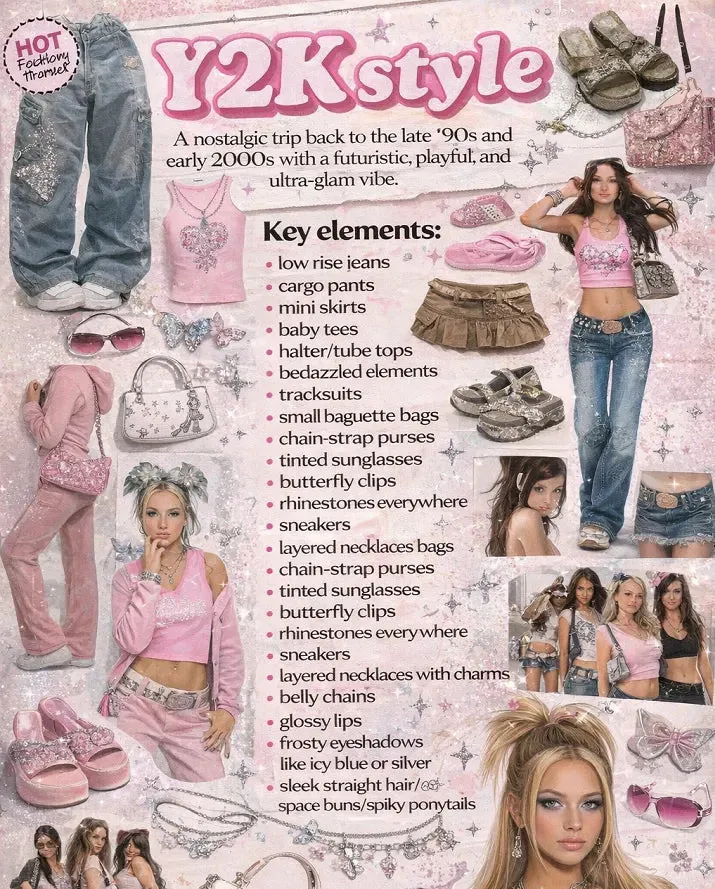
Photo: 2000s fashion aesthetic nostalgia Y2K style vintage, via cdn.shopify.com
Let's be honest about something: the 2000s revival was supposed to be a moment. A cute little throwback. A fashion cycle doing its predictable 20-year rotation. People would wear some chunky highlights, stream some old Destiny's Child deep cuts, and move on.
That did not happen.
Instead, the early-2000s aesthetic has become a permanent fixture of American pop culture — cycling back every few months in a new form, pulling in new participants, and refusing to fade into the background the way, say, the '70s revival eventually did. We are now deep inside a nostalgia loop that shows no sign of releasing us, and it's worth asking why.
The Decade That Keeps Getting Recycled
The data is everywhere if you know where to look. Y2K fashion — baby tees, Von Dutch hats, low-rise everything, bedazzled flip phones used as aesthetic props — has dominated TikTok style content for years. Nelly's "Hot in Herre" and Outkast's "Hey Ya" still hit every summer playlist. "Mean Girls" got a Broadway adaptation that became a movie. Paris Hilton is not just relevant again — she's a brand empire. Lindsay Lohan has a Netflix Christmas franchise. Destiny's Child-era Beyoncé samples keep appearing in new chart hits.
This isn't nostalgia in the traditional sense. Traditional nostalgia fades. This is something more persistent — a cultural feedback loop where the 2000s keep getting rediscovered, re-consumed, and repackaged for audiences who either lived through it or are experiencing it for the first time through the filter of someone else's memory.
And crucially, it's not just millennials doing the reviving. Gen Z — who were toddlers or literally not yet born during the height of Lizzie McGuire and AIM away messages — has developed a fierce attachment to the aesthetic of a decade they never inhabited. They're not remembering it. They're adopting it.
Nostalgia as a Psychological Safety Blanket
To understand why the 2000s specifically keep winning this competition, you have to understand what nostalgia actually does to your brain.
Research in psychology consistently shows that nostalgia functions as an emotional regulation tool. When the present feels unstable, threatening, or just relentlessly exhausting, the mind reaches backward toward periods that feel emotionally resolved — times where the outcome is already known and the chaos has been survived. There's a comfort in the past that the present, with all its open-ended uncertainty, simply cannot offer.
Now consider what the present actually looks like for most Americans right now: economic anxiety, a housing market that seems permanently broken for younger buyers, climate dread, political polarization that makes the news feel like a low-grade emergency every single day. Against that backdrop, the early 2000s — for all their actual problems, which were significant — feel almost quaint. The internet was slow and kind of dumb. The fashion was ridiculous. But it was manageable ridiculous. The stakes felt lower. The world felt smaller.
"There's this sense that the early 2000s were the last moment before everything got complicated," says one cultural analyst quoted in a recent piece for a major lifestyle outlet. "Before smartphones made you permanently reachable, before social media made everything performative, before the news cycle became a 24/7 anxiety machine."
The early 2000s sit in a sweet spot: far enough away to feel safely nostalgic, recent enough to feel culturally familiar. They're not dusty history. They're a just-out-of-reach version of now.
The Business Machine Behind the Feeling
Of course, feelings don't drive cultural revivals alone. Money does.
The entertainment and fashion industries have become extremely good at identifying nostalgia cycles and then aggressively accelerating them. A Y2K-coded look goes viral on TikTok, and within weeks, fast fashion brands have a full collection. A streaming platform licenses the rights to an early-2000s TV series, drops it on their platform, and watches the algorithm do the rest. A legacy pop star drops a documentary about their early career, and suddenly a whole generation is going back to the catalog.
The 2000s are particularly valuable IP right now because the generation that created those cultural artifacts — millennials — has reached peak purchasing power. They're in their late 20s to early 40s. They have disposable income, or at least the illusion of it. They will absolutely pay for a "Y2K aesthetic" candle, a remastered Panic! at the Disco vinyl, or a streaming subscription just to rewatch "The O.C."
And Gen Z, who discovered the era secondhand, represents a completely new market. They're not buying nostalgia for something they remember — they're buying access to a cultural identity that feels richer and more textured than whatever algorithm-generated microtrend showed up in their feed this morning.
Two Generations, One Decade, Zero Consensus
Here's where it gets genuinely interesting: millennials and Gen Z are both claiming ownership of the 2000s, and they're not always claiming the same 2000s.
For millennials, the nostalgia is personal and specific. It's the smell of a Motorola Razr flip phone (somehow). It's the specific way a MySpace profile felt like a home you'd decorated yourself. It's the memory of downloading a song illegally on LimeWire and hoping it wasn't actually a virus.
For Gen Z, the 2000s are more of an aesthetic template — a vibe to be sampled and remixed. They're not mourning a lost era. They're mining it for parts. The result is a kind of nostalgia that's simultaneously sincere and ironic, which is very Gen Z energy.
This generational overlap creates a cultural moment that's genuinely unusual. Normally, nostalgia cycles are owned by one generation at a time. The fact that two very different cohorts are both emotionally invested in the same decade — for completely different reasons — is part of why the 2000s revival has sustained so much longer than anyone predicted.
When Does the Loop Break?
The honest answer is: probably not soon.
As long as the present feels overwhelming and the early 2000s feel like an emotionally manageable alternative, the cultural appetite for that era isn't going away. The business incentives are too strong, the emotional need is too real, and the aesthetic is too easily replicated on a TikTok budget.
What might shift is the texture of the revival. As Gen Z ages and develops its own nostalgia objects — probably early 2010s Tumblr culture and the first generation of viral YouTube — the 2000s may eventually drift into a more settled, less frantically revived place in the cultural imagination.
But for now? Put on your Von Dutch hat. Queue up some early Nicki Minaj. Let yourself feel the specific comfort of a decade that ended before everything got this complicated.
The loop is still spinning. And honestly, we kind of need it to.