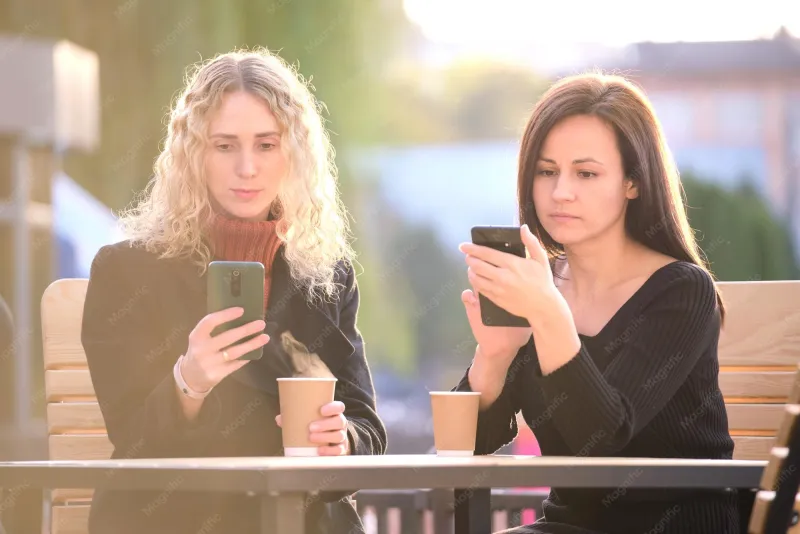
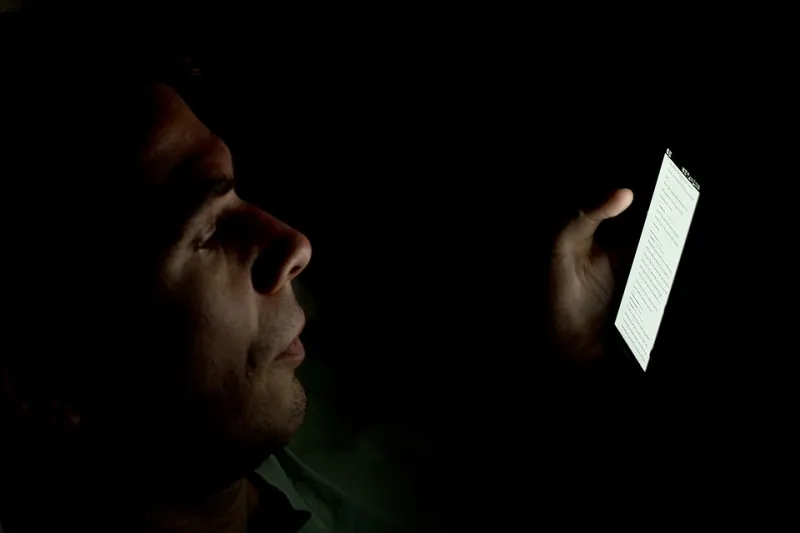
Empty Space, Premium Price: Why Americans Are Paying Good Money to Be Bored Again

Photo by Photo by Maxim Tolchinskiy on Unsplash on Unsplash
There's a resort in rural Vermont that charges guests $600 a night to stay in a cabin with no Wi-Fi, no television, and a strict no-phones policy after 7 p.m. The waitlist, as of last spring, stretched three months out. The selling point isn't a spa or a mountain view — it's the absence of anything happening at all.
Let that sink in for a second.
We've reached a point in American cultural life where doing absolutely nothing has become aspirational. Boredom, the thing your parents told you was your own fault, the thing apps were literally designed to eliminate, is now a premium experience that people are actively hunting down and paying for. And the more you look at it, the less surprising that actually is.
The Overstimulation Hangover Nobody Warned Us About
For roughly the last fifteen years, the entire architecture of digital life has been built around one goal: keeping you from ever feeling bored. Infinite scroll, autoplay, push notifications, algorithm-curated feeds — every feature you interact with daily was engineered to fill the gap the moment your brain even hints at wanting a rest. And it worked. Spectacularly.
The problem is what got lost in the process.
Boredom, it turns out, wasn't just an uncomfortable feeling to be eliminated. Neuroscientists and psychologists have been saying for years that the wandering, unstimulated mind is actually where a lot of the good stuff happens — creative problem-solving, emotional processing, the kind of loose, associative thinking that leads to actual ideas rather than just reactions to other people's ideas. When we handed that mental downtime over to the algorithm, we didn't just cure boredom. We traded away something we didn't realize had value.
Now the bill is coming due, and people are starting to feel it.
Boredom as a Business Model
Here's where it gets genuinely weird: the market has noticed. And the market, being what it is, has figured out how to sell boredom back to us.
Digital detox retreats are no longer a fringe thing. Camp Grounded, which bills itself as a summer camp for adults and bans screens entirely, has been operating for years and consistently sells out. Analog travel experiences — think guided hiking trips where your guide holds your phone in a lockbox — are popping up across the Pacific Northwest and the Appalachians. Wellness companies are packaging "intentional boredom" workshops alongside breathwork and sound baths, and people are signing up.
Then there's the stranger, more online version of this trend. A growing corner of content creation is built entirely around doing nothing interesting. Slow TV — long, unedited footage of train rides, campfires, rain on windows — has migrated from a Norwegian public broadcasting experiment to a genuine YouTube and streaming genre with millions of dedicated viewers. Channels that feature someone quietly reading, or footage of a fireplace looping for eight hours, rack up views that most traditional creators would kill for.
The content is deliberately, almost aggressively uneventful. That's the entire point. People are watching someone else be uninteresting because it gives their own brain permission to slow down without actually having to sit alone with themselves.
The Creativity Angle Nobody's Talking About Enough
Ask almost anyone who creates something for a living — writers, musicians, designers, even the people making the content you're consuming right now — where their best ideas come from, and almost none of them will say "while scrolling." They'll say the shower. A long drive. A walk without headphones. The weird liminal space right before falling asleep.
Those are all boredom-adjacent states. They're moments when the brain isn't being fed input and has to generate its own.
The concern that's starting to bubble up in creative communities is real: if you never let your mind go genuinely unstimulated, you start running low on original output. You get better at reacting and remixing, but the raw material — the weird personal stuff that makes creative work actually feel like it came from a human being — gets thin. A lot of people working in creative fields will tell you quietly that they feel more derivative than they used to, and they're not entirely sure why.
Boredom isn't a bug in the creative process. It's closer to a necessary input.
So What Are We Actually Buying?
When someone drops several hundred dollars on a no-phone weekend in the woods, what are they purchasing, exactly? On the surface, it looks like a simple reaction to burnout — the digital equivalent of a juice cleanse after a rough month of eating badly. But there's something more complicated going on.
Part of what people are paying for is permission. Permission to stop performing availability. Permission to not be productive. Permission to sit with their own thoughts without immediately reaching for something to drown them out. In a culture that has quietly made constant connectivity feel like a moral obligation — where being unreachable for even a few hours triggers anxiety — that permission has genuine value.
There's also something about scarcity at play. The economics here are almost darkly funny. Boredom was universally available and free for basically all of human history. Now that we've engineered it nearly out of existence, it's become scarce, and scarcity makes things desirable. We want what we can't easily have, and we can't easily have an unoccupied mind anymore.
Finding Your Own Dopamine Menu
You don't have to book a $600 Vermont cabin to experiment with this. The concept of a "dopamine menu" — a curated list of low-stimulation activities you reach for instead of your phone — has been floating around wellness spaces for a while now, and it's one of the more practical ideas to come out of this whole conversation.
The idea is simple: you make a literal list of things that are mildly engaging but not overwhelming. A walk without music. Sketching something badly. Sitting outside without an agenda. Cooking something slow. The goal isn't to become a monk. It's to give yourself more options than "scroll or do something productive," because those aren't the only two settings your brain has.
The fact that we need a menu to remind ourselves to do things humans did naturally for thousands of years is, depending on your mood, either hilarious or a little sobering.
The Real Luxury
Maybe the most honest thing you can say about the boredom economy is that it's revealing something we'd rather not look at directly: we built a world of infinite entertainment and ended up more mentally exhausted, less creative, and somehow less satisfied than before. The retreat industry and the slow TV genre and the $600 cabin in Vermont are all, in their own way, admissions that something went sideways.
The good news is that boredom is still free if you're willing to fight for it. You don't have to pay anyone to put your phone in a drawer and go sit on your porch for twenty minutes. The discomfort you feel in the first few minutes of doing that — the itch, the restlessness, the almost physical pull toward stimulation — that's exactly what people are spending money to push through.
Push through it anyway. See what's on the other side.
Sometimes it's nothing. And nothing, it turns out, is exactly what a lot of us need.